
Embark on a Transformative Journey
Experience the Kumano Kodo: A 77 Kilometer Pilgrimage in My 77th Year
Join me as I traverse the breathtaking Kumano Kodo, embracing nature and spirituality on this personal quest for self-discovery and wellness.
Frequently Asked Questions
What is the Kumano Kodo?
The Kumano Kodo is a network of ancient pilgrimage routes in Japan, recognized as a UNESCO World Heritage site. It offers a unique opportunity to experience Japan’s spiritual heritage while enjoying breathtaking natural landscapes.
How long does it take to walk the Kumano Kodo?
The duration to walk the Kumano Kodo varies depending on the chosen route and pace. Typically, it takes about 4 to 7 days to complete the most popular routes, covering approximately 77 kilometers in total.
Is the Kumano Kodo suitable for beginners?
Yes, the Kumano Kodo has various trails that cater to different skill levels, including beginners. With proper preparation and pacing, anyone can enjoy this spiritual journey through nature.
What is the best time to visit the Kumano Kodo?
The best time to visit the Kumano Kodo is during the spring (March to May) and autumn (September to November) seasons. These months offer mild weather and stunning natural scenery, making for an enjoyable hiking experience.
What should I pack for the Kumano Kodo?
When preparing for the Kumano Kodo, it’s essential to pack lightweight, moisture-wicking clothing, sturdy hiking boots, a rain jacket, and a refillable water bottle. Don’t forget essentials like sunscreen, a first-aid kit, and snacks to keep your energy up during the trek. A walking stick can also be beneficial for stability on uneven terrain.
-

My first trip to Japan, 1975 with Tetsuko Kuroyanagi
Paths taken, directions given, leaders followed, heritage honored; they are but small steps to a trek led by an inner compass.
The seventy seventh year in Greek is LXXVII, which appears insignificant. In Ancient Greek it is OZ’ which is aligned with spiritual transformation . This is another sign that this is the right path at the right time.Adventure awaits ; mine was submerged in the back of my mind, blanketed over with mundane tasks, duties to others, and adherence to the expected life. In 2024 I lost Carlos , my husband of 27 years after a battle with cancer. All of my storage tanks became half empty, thoughts and plans collided as I became a sole surviver on a lonely planet, albeit with three furry friends. I found reality in my dreams, and have let them become my scouts. Carlos and I had a motto “ we can do anything” , I resolved to continue that pact and open long closed doors to allow that “anything” to expose it’s hidden road. .
I am who I am , I will let affectations , ego, and aspirations dissolve into the clouds above. My true self was last seen in childhood, before expectations and influences, when my teachers were horses, dogs, cattle, trees, and the land, when I walked into the woods and sleep with my dog beside me and just listened as my surroundings spoke. This is not the time for comforts when adventure awaits.

Carlos & me, photo:Terry Richardson for Another Magazine
The Appalachian trail called me to to be near where I had started . I was born in Tennessee, not very far from the trail. I studied it , watched the hikes of others especially Adventure Archives on Utube, read about the dive into one’s self while traversing a mountain top. I followed my hiking guru , Levinson Wood through many pages and volumes covering the most difficult of paths. It was not physical, it was spiritual . His trips were largely ethnographic, as his observations were as much about the people and their societies that he encountered, as well as the terrain which he traversed.
I once dreamt of hiking a path dotted with shrines in Japan upon which I took with Daisy , my dog. She was my interpreter of all things natural. I resolved this fantasy by writing a short story about our fictional trip together. It enabled her to hike on a mountain side which she would have been able to master. I then found a story about ‘The Kumano Kodo’ , a religious pilgrimage in southern Japan which wound through mountains stopping at both the smallest and grandest of shrines and gates. It stretched 77 kilometers. It became my quest.
This is my seventy seventh year . It is not coincidental but destined that this is the year to step onto the Kumano Kodo and stop only after the shrines have been acknowledged and the kilometers covered. I expect to never leave it. I have read that those who die on the trek are remembered by having a small shrine placed to mark the place of one’s last step. My plan is to physically leave at the end of my march but carry it’s spirit with me.

My DNA is that of a farmer, however a half century of city living has left scars on my body. I have notified my Doctors and have had it entered into my medical notes that I will be extreme hiking within five months and that they must do their part to ready my being . My unnecessary gall bladder became bothersome, so it has been expunged. My artery was bogged down with the residue from eating not what I needed but what I wanted. The silt has been flushed . I will ready by body, my mind, my soul.
Japanese language , ( Nihongo) , I have studied on and off for many years. In 1976 I was hired by Hanae Mori to be her New York Fashion Director. She said that that I needed to understand her company and it’s roots by living in Japan for two months. On my first day in Tokyo, I experienced an earthquake. This was a physical seismic event, the aesthetic atmosphere would later shake me more profoundly from the inside out. I stubbornly insisted that it was impossible to learn Japanese, and refused to try. It was summer and very humid, with the absorption of the moist air into my body , the culture and language also invaded my sponge like being. Shinto shrines, Kabuki, and young ginkgo trees carefully supported by poles and ropes in a cared for plot against the passing children who were carefully dressed with backpacks wearing name tags on their way to school; all living things were given attention and care here. Being a blond six foot three inch caucasian, assimilation would not be possible or wanted, but absorption was inevitable. After returning to New York in 1976 I enrolled in a Japanese language class at Japan Society. I was able to learn the Japanese social pleasantries. Friends taught common expressions with guttural references. Both are invaluable. Now in 2025 In order to take a solo trek on the Kodo I feel it necessary to expand what little proficiency I had, so I entered a Japanese Conversation Class at the Westbury Library as well as studying at home with on line tutorials, and videos. I imagined seeing myself alone on a mountain with the bear ( kumo ) , knowing that I would need to speak softly in Japanese to the bear, so as not to startle or enrage him , but just to share the space and with some communication To that end, I study. repeating each lesson numerous times until it eventually is cemented I am also trying to learn the Japanese phonetic writing system (katakana). I had always considered it impossible , but even the knowledge of a few characters could be valuable with road signs. To sign in at each (Ryokan) Inn with my name in Japanese characters is a worthy ambition.

Marisa Berenson , photo: Hiro, hair: Suga
The end of autumn is when the mountain is most naked, when the city dwellers have returned home, when the bear are reading their beds for naps, when the snakes slither into their crevices and when I will be able to experience the Kumano Kodo at its core. Leaves will have fallen and the snow clouds are reading . November is the that time.
I look forward to staying in traditional inns (Ryokans) and Buddhist monk quarters (Shukubo) now accept travelers as well as pilgrims. They are functioning monasteries with religious practices which visitors can participate in if desired. I will be dependent upon inn keepers for my breakfast, dinner and futon. Monks are the best guests as they appreciate whatever they are given to eat, wherever they are able to sleep. I will keep a monk like mindset as I exercise ridding myself of wants, in favor of needs. If only projected in my mind, a saffron clothed monk will lead me through the mountains , and into simple villages . I look forward to meet the imagined one, secure his name and story along the way.
Until November my task will be to stay present in preparation mode. .

Oku Japan, a tour company based in Kyoto, offers self guided trips . They provide maps and make reservations for the nightly stops .My choice is a six day & night venture. It is important to me that I spend my nights in a tatami floored guest house , sleep on futon , bathe in a wooden tub, and have a diet based on udon and rice all washed down with green tea and a Japanese beer. To that end I must practice cross legged sitting on the floor. How could one feel the tatami and receive it’s vibration without sitting directly and comfortably on it ?
I have an common addiction to overcome before beginning the pilgrimage : iPhoneitis . I need the phone for necessary communication, mapping, weather, and recording only. This should be a vacation from social media and news. The phone is my compass, like it was for Jack Sparrow who used it to point to both the physical direction as well as his desired one. This trip is my current dream and that is the direction that I will follow.
Although I have achieved seventy-seven years , I find myself regressing into the likes of boyhood. Repeating the past in not interesting, but seeing everything which is current with child-like eyes can be exciting. This is in no way disturbing but a safe place to be where fright is overcome by wonder , where needs and desires are funneled to few, where earth replaces concrete.
“Be prepared” was drilled into me as a Boy Scout. I have always applied that principal but I must now be prepared for the unknown , the unforeseen. I am preparing something akin to an astronaut’s check list . I need to ready and supply my vessel (me) . The objective is to float , like a spirit slightly above the trail. It might not be achievable , however to reduce my footprint until it is negligible is. Research will enable me to find weightless clothing, backpack, shoes, food, and gear. I must be aware of every ounce that I carry, the scale and hiking journals are my only assistants. The biggest factor is to have my body and mind ready. Practice walks will ready my legs, lungs and confidence. The maximum distance that I will walk in any single day in Japan will be 16 kilometers. ( I must also start thinking metrically) At 192 centimeters and 83 kilograms I can use my body for reference. Starting with a daily walk of three kilometers and increasing it by one kilometer each week will get me to sixteen kilometers in three months which is the time I have to prepare.
Backpacks, The NY Times introduced me to ; Osprey Farpoint which can carry 40 liters and weighs 1.6 kilograms. The J.A.L. and ANA international flight restriction’s for backpacks are 22 x 15 x 10 and up to 22 lbs . When I select the right size and purchase it I will start wearing it on my practice walks, gradually packing it and driving water from it as well.
Clothing, CNN did a test of the best hiking pants and their choice was prAna Zion , they weigh .3 kilograms. Fortunately I know the company prAna ( life-force in Sanskrit) and have appreciated their ecological and natural philosophy which one can feel in their clothing, and I already have the pants. My favorite color is blue , however I will leave blue and black behind in favor of wearing forest colors of earth, bark, leaves and the occasional rusted saffron. Be one with the woods.
Hiking boots, I have read many good reviews about “KEEN”. Waterproof , at 72 kilograms they could be a good choice, I will also check out Hoka. Before buying the very important boots, I hope to see a podiatrist. I have always worn a size 12 ,now I have a bunion developing on my left foot and might need to get a size larger with orthotics. This is something that I would normally not have bothered with, however a little bother could save a difficult trail day. I have started wearing compression socks which help monitor my blood pressure, they will be most helpful on the uphill sections of climbing 1,240 meters.
Eating, I am very happy to continually dine on Japanese food. I am a vegetarian / pescatarian so “Monk “ food will suit me well. I will have a breakfast and dinner at the Inn’s each day. I expect to carry a large water sack in my backpack with a tube for drinking, this is all I really need, but I plan to carry, rice crackers, (sembei) and what ever dried fruit I find locally for a lunchtime snack. I will also pack some protein bars and possibly drinks. There are fruit trees and edible plants along the way, but I expect to not find any in November, and what is there belongs to permanent animal residents, not to a would-be monk.
Weather, The high should be 62 F (17C) and the low 46 F ( 8 C.). It should be sunny with little rain. The average sunrise will be at 6;30 am and sunset at 5;15 pm. I will need to be hiking at sunrise in order to return during daylight on the longest of the walks.
Reverence, I will be stopping at many shrines each day. It is important to have the proper way to show respect; bowing, clapping, praying and leaving a small offering. Five (go yen ) is the most common coin and it’s name in. Japanese has a good luck significance which makes it appropriate. It is such an important number that Japanese dishes and other items normally come in sets of five. It is my favorite coin because it has a hole in the center ,and being made of copper and zinc, it has a brass allow color. It is the only coin without an alpha numeric numeral on it. Using the center hole I will string them and wear them for this purpose.

Each shrine has a stamp which is used to mark in a book of shrines which one’s carries to signify each stop made.

Mountain Mantra, Steps taken need no visualized distraction , only a reminder to absorb all the surrounding senses . A mantra needs to be developed along the path because it cannot be forecasted .
I have likened the preparation and training to a life challenging trip into space , it is however more like an olympic training camp, where one can learn the techniques needed to complete the course. Competition is eliminated as I plan to be alone on the trek. Meeting other pilgrims alone the way and registering the diversity of motivation in each will be a dessert to my main course of nature. Saying hello and saying good bye are emotional equals. All things are relative as this training could also be equated to recess for a first-grader.

Verushka, photo: Avedon for Vogue
Diana Vreeland, when planning Vogue’s first photo shoot in Japan instructed the participants; “ It is essential that everyone must read Tales of Gengi before the trip.” I will take her advise, read and examine how this book from the eleventh century prepares me as it prepared Veruschka , Avedon and Polly Mellon in 1966. All of whom I have known and admired. George Plimpton who had no connection to Japan, that I know of, resered his final endeavor on earth to plan that his ashes be sent off in a Japanese firework called a “Kamuro”.( to crown oneself .) What do Diana and George have to do with this pilgrimage ? Nothing, but they both have had a great influence on me and I will be carting their teachings , insights and strength with me.

With Diana Vreeland 1978
28, July. My routine doctor’s visit was an opportunity to challenge my doctor to insure that I would be ready for the pilgrimage . He accepted that by stating that I am and would be ready. After reviewing my recent bloodwork, he had only one recommendation ; add B12 supplements. My continued dizziness was blamed on my recent Carotid Artery surgery, which he said would take a few months for my body to regulate itself. He ordered bloodwork to be taken in early October and scheduled an appointment to see him again ten days before I leave . He did advise me to be very careful as he had another patient who attempted the other UNESCO World Heritage Route; The Camino de Santiago in Spain. I explained to his rolling eyes that I would not be attempting that hike until 2026. He emphasized that this was a younger man and that he had been found passed out from dehydration in a ditch along the path. He spent a couple of days in a Spanish ICU hospital. My doctor explained that sufficient hydration starts 24 hours before any exertion; when you drink water is it is for the next day. He cautioned me , then re-cautioned me about going alone as I gave him assurances of my preparedness. He referred me to a Podiatrist to prepare my feet . I left humming “ These boots are made for walking.”
29 July. My hiking pants have arrived. prAna did not have my size available, but I found two pair on Ebay. After a quick wash I started wearing them. I have never has such light pants , they feel like being naked. They will be too cold for November but an added pair of long underwear will resolve that. They are have a lot of stretch and will allow me to climb a tree when necessary ( I actually do not see that part of childhood activity becoming possible.) I will continue wearing them to remain in hiking mode.
31 July. My doctor alerted me to determine if my medical insurance will cover me and if not what insurance would. I called my insurance company and found that I would be 100% covered for hospital and ambulance costs. I might need to talk to their international coordinator so I must insure good and sufficient phone coverage. My passport is up to date as is my Clear app. for immigration. The other items to check are , Visa, Telephone, credit cards, and business cards ( meshi) In Japan it is traditional to exchange business cards when meeting someone new, let it continue mountain-side. I hope to get a card with my name printed in (Katagiri) on the back side.
1 August. Japanese conversation class. We have a new member , a second generation Japanese man who is a nutritionist. ( Eiyoushi) . The class often follows what is happening in the news. This week was the Russian earthquake,( jishin,) and the following (tsunami). . How it started an evacuation ,( sokai ), the liquid ,( ekitai) would break through the earth ,(jimen.) I am the least fluent in the group, so my input is minimal, however it is good to hear Japanese spoken all around me at a fast rate, while I grab what I can. I am making notes by capturing the words broken down into syllables so that I will be able to attach those syllables to ( katakana ) characters.
I was asked what does your family think of this plan. I have little family left , only a niece and nephew. Today is the first anniversary of my brother’s death. I know what he would have said. “If youn are preparing so much and traveling so far, I think you should hike farther.
3 August. I have started to read “The Tale of Genji” ( Genji Monogatari ) . It is the world’s oldest novel , and the language of that time is no longer used. The book was written as a piece of art , with meticulous calligraphy overlapping floral and landscape scenes. Very little of its original form exists today , therefore we rely upon translations pieced together from ancient translations. The introduction alone gives great insight into Japanese culture of the time which has filtered down to current society. I am reading a summary and readers guide rather than a more direct translation. I will miss the poetry of it, but will understand the story in relation to the period and place in Japanese society in which it was written .
4. August. Today I walked 5.3 miles ( 8.5 kilometers)
According to my plan this is the week that I should be walking 5 kilometers so we are on schedule. I had planned to make the amount t of walking a daily minimum, it is not possible to make this mark each day so my goal will now be a daily average. Today was all flat and leisurely, no difficulty no tiredness. The only shortcoming was not knowing where I was walking, I must concentrate on being aware of direction, getting my internal compass to work.
5.August. 1. Podiatrist- my feet were x-rayed and the doctor decided that my bunions and hammertoes required no orthotics, He explained to soon get hiking boots ,and wear them constantly while training. 2. Vascular Surgeon- She stressed that I need to stay on all the medications, and to repeat sonograms every six months, otherwise I am ready for the hike and that I should take my Vascular Surgeon with me. I walked to meet friends at a restaurant and back 3 miles each way, totaling 7.2 miles for the day ( 11.5 kilometers )
.

6 August. 4 miles (6.5 kilometers) walked.
From reading The Tale of Gengi, my knowledge of the history of Japan is becoming clearer. The chapters were mostly titled after flowers or other parts of nature: the Broom Tree (Hahakigi) The Saffron Flower (Suetsumo Hana) heart vine (Aoi) Wisteria leaves (Fuji no Akaba) mostly without relation to the chapter’s content. The native religion is Shinto, in which man and nature are linked . Purification is an ambition which has remained a part of the culture separate from it’s religious origin. All aspects of art were essential to members of the royal society, in which everyone practiced either; poetry, music, drawing, These talents were more important than physical qualities and were what one sought in a mate. The Tale mostly concerns the complexities of interpersonal and familial relationships at court.
7, August . 4.7 miles, (7.5 kilometers.)
The light behind the clouds (kumagakure) signified the passing of Gengi. It was natural for members of the court including the Emperor (Tenshi) to approach the end of life on earth as a transition ( henkei ), not a death. There were stages of letting go, from abdicating power, renouncing worldly possessions, and destroying any correspondence and papers. The final act was to become a monk , read scriptures, and contemplate nature until the final transformation. Earthly life was equated as being in a cocoon. Women needed to ask permission to become a nun. I have finished the summary and will now attempt the translated novel itself.
8, August, 4.4 miles ( 7.2 kilometers)
Today Daisy and I went to our favorite hike; Lake Mohegan Loop In Fairfield. The route is variable, we walked 2 1/2 miles. (4 kilometers.) It includes some difficult rocky sections and a little 100 ft incline. It is now time to get serious about hiking boots so I went to REI, I settled on Obox Bridger. I let fit and stability be my guide,

Daisy
9, August. 5.2 miles ( 8.4 kilometers)
My business cards (Meshi) English reversing to Japanese have arrived ::

10, August 3.1 miles (5 kilometers). Sunday Day off
11, August 4.2 miles (6.7 kilometers) My feet are happily trodding in the new boots. The heat wave has restricted my walking The plan for this date was to be at an average of 3.7 miles per day (6 kilometers) my average for the past week was 4.8 miles ( 7.8 kilometers.)
12, August 3.1 miles (5. Kilometers). I went to a Chinese restaurant tonight with friends. My fortune read :

13, August. 2.8 miles (4.5 kilometers.) This is the first day of my seventy-seventh year, the countdown to the 77 kilometer hike officially begins ; 89 days left to ready myself. I hope to soon take the advice of Steve McQueen “I would rather wake up in the middle of nowhere than in any city on earth,”
14. August 88 days to go. . 3.4 miles. ( 5.4 Kilometers ).at 90 F it is too hot to walk much. Today I saw a pulmonologist. She is ordering a breath test and a chest C-scan. She understood my need to be able to walk uphill. She took notes on the Kumano Kodo during our conversation and stated that Japan was the country she most wanted to visit.
15, August 87 days to go, 4.0 miles (6.4 kilometers) I have received maps of good local hikes which have rugged inclines to walk. I will attempt when the weather permits.
16.August , 86 days to go. 2 miles (. 3.2 Kilometers). Today I received a book “ Legends and Paintings, The Tale of Genji”. Its purchase is the result of an unknown chain of events. In the 1970’s when I worked with Hanae Mori, we developed a good relationship with a client; Mary Burke who was enthralled with Japanese esthetics. I remember her as a gentle woman with a small ego. She quietly amassed one of the most important collections of Japanese Art which was later left to The Metropolitan Museum of Art . This art in this book is from a seventeenth century book from her collection. In October of 2024 I went to The Japan Society building in New York to the opening of a collection of art to which my friends , Kazukuni Sugiyama and David Frank had loaned ceramics. It was the last curation by Miyeko Murase and that evening became a memorial to her. This book was her creation. I had no idea last year when I saw her work that I would be planning a trip that would have been so important to her. I didn’t even know of her. I will both remember Mary Burke and thank Miyeko Murase as I step onto the path. This is another page in the fulfillment of destiny.

17, August, 85 days to go, 2 miles (3.2 Kilometers). Sunday is a day of reading and rest. I have started the Arthur Waley translation of The Tale of Genji. From the first sentence “ At the court of an Emperor ( he lived, it matters not when)…. This first line sets the stage for contradictions in implied importance which resonates throughout the story. This early hook has me in it’s grip.
18 August, 84 days to go, 4 miles ( 6.4 kilometers.) Daisy and I walked the Lake Mohegan Loop in Fairfield , Ct., rugged but beautiful with a two hundred foot incline.

23 August. R.E.I. sale day. My friend and neighbor Mike who knows all about camping & hiking gear went with me to REI. Daisy and I will be making some short overnight trips to the wilderness before I take off to Japan, so gear for the domestic part with items for Japan are needed; Osprey 40 L backpack with water pack, telescoping poles, sleeping bag and tent.


29 August My first stumble is not on the trail but in a doctor’s office. I have been experiencing dizziness and lightheadedness whenever I attempt a stair or elevated walk. After seeing a Pulminary Dr, a Cardiologist and a Vascular surgeon my G.P. suggested that I have POTS. (postural orthostatic tachycardia syndrome) I had almost given up on the trip for this fall. However I followed the protocol for this nuisance disease and after two days I am convinced that it is manageable. I have contacted OKU Japan with the plan of arriving in Tokyo on November 18, starting the hike on the 21st , returning to Tokyo on the 28th and back to the U.S on Dec 1st. Where better to spend Thanksgiving than on a mountain in Japan?

Sept 2nd 76 days to go
Reservations are now made;
Arriving Nov 18 at Haneda , staying 3 nights in Tokyo with a friend, to Kyoto and the Kumano Kodo on the 21st , back to Kyoto on the 25th for two nights then return to Tokyo for 6 nights . I will then say “Ja Ne ” because it it not good bye but see you later .
l

Yukio Mishima
6 Sept. 72 days to go
In December of 1970 I read a story of Yukio Mishima’s suiside ( seppuku ) by self inflicted sword. I thought that if this author’s story appeared in a small town newspaper in Michigan , there must be a bigger story to his life. I started reading ‘ Confessions of a Mask ‘then,’ The Temple of the Golden Pavillion.’ I was captured by the Zen based metaphors of plants and animals. I then moved on to other studies until his story reappeared this week in The NY Times.
I have just received The Temple of the Golden Pavillion (Kinkakuji.) I will try to read it before attending a performance based on it at Japan Society next week.

The Golden Pavilion 1975
I was planning to take the Nakahechi route however upon booking it was not available so I will be taking the Iseji route. This leaves room for the Nakahechi next year.

The Iseji is ~170 km long trail on the east coast of the Kii peninsula connecting Ise Jingu with the Kumano Sanzan and consists generally of north, central, and south sections. To trek the full length can take one to two weeks, but many of the shorter passes can be enjoyed as shorter day hikes because trailheads are often located near train stations. I will spend five days hiking mixed with local buses and trains to complete the journey.


Iseji Shrine
11 September. 7 miles walked 17 flights climbed
66 days to go
To Japan Society , for The Golden Pavillion exhibition and performance. It was a time travel into the world of Kyoto in 1965 with a monologue in a beatnik manner.
After the excursion I realized that my walking and climbing without any difficulty meant that I am ready.

I also found out that the reason that the Nakahechi route was not available was because it will be leaf peeping time in Japan in mid-November and all the Inn’s are full.
My new nightly routine; Chinese Daoist Home Workout . I follow an animated Chinese Monk on you-tube , somehow my joints appreciate it .

One hour to Tokyo ! After many months of medical mysteries , enough preparations to enable a space flight and hiking the Himalayas of Connecticut I am finally about to land in Japan. Ohm Shanti Ohm

Today Nov. 18 my first day in Tokyo I visited a special place ; The Tokyo Memorial Shrine. It is dedicated to children who passed on at a too early age. Each of the figures are modeled using some characteristic of the child. The shrine shows the happiness within each.


KOISHIKAWA KORAKUEN GARDENS
This was built by the founder of the Tokugawa clan in 1629.The name means ” Worry before all worries the world, a d enjoy all the enjoyments of the world.” The gardens are being prepped for winter with umbrella like nets to protect evergreens from the snow, brain g with bamboo to help the fragile branches hold up, banding the trees with grass panels to prevent infestations, and raking with traditional bamboo rakes, There are no leaf blowers here.


I have just arrived in Kyoto where I will spend the night before starting the hike in the morning. It was a long trip from Tokyo because I fell asleep on the train and stayed until the last stop at which I found a local to bring me back to Kyoto . I have a very nice Japanese style room in Solaria Nisitetsu Hotel with a garden just outside my bathroom. another mistake was to bring packaged food items from home for my lunchs as nothing would be available on the trail. The choices here are terrific.

November 21, the first day on the KUMANO KODO
Kuma means of Bear and Kodo on the incline, So I will now be an imported bear hunter in the vein of Jane Goodall; hunting to learn from not to harm.

After 1 express Tain , 1 local, 2 buses, and 6 miles of walking I have arrived at the coastaltown of Ise-Futamichoe. It is famous for two large rocks off the coast which are joined by rope , a good omen for couples. My ryokan is traditionally Japanese. One must deposit one’s shoes before entering the lobby, the floor in my room is tatami and the bed futon. The surprise was the view of the ocean.

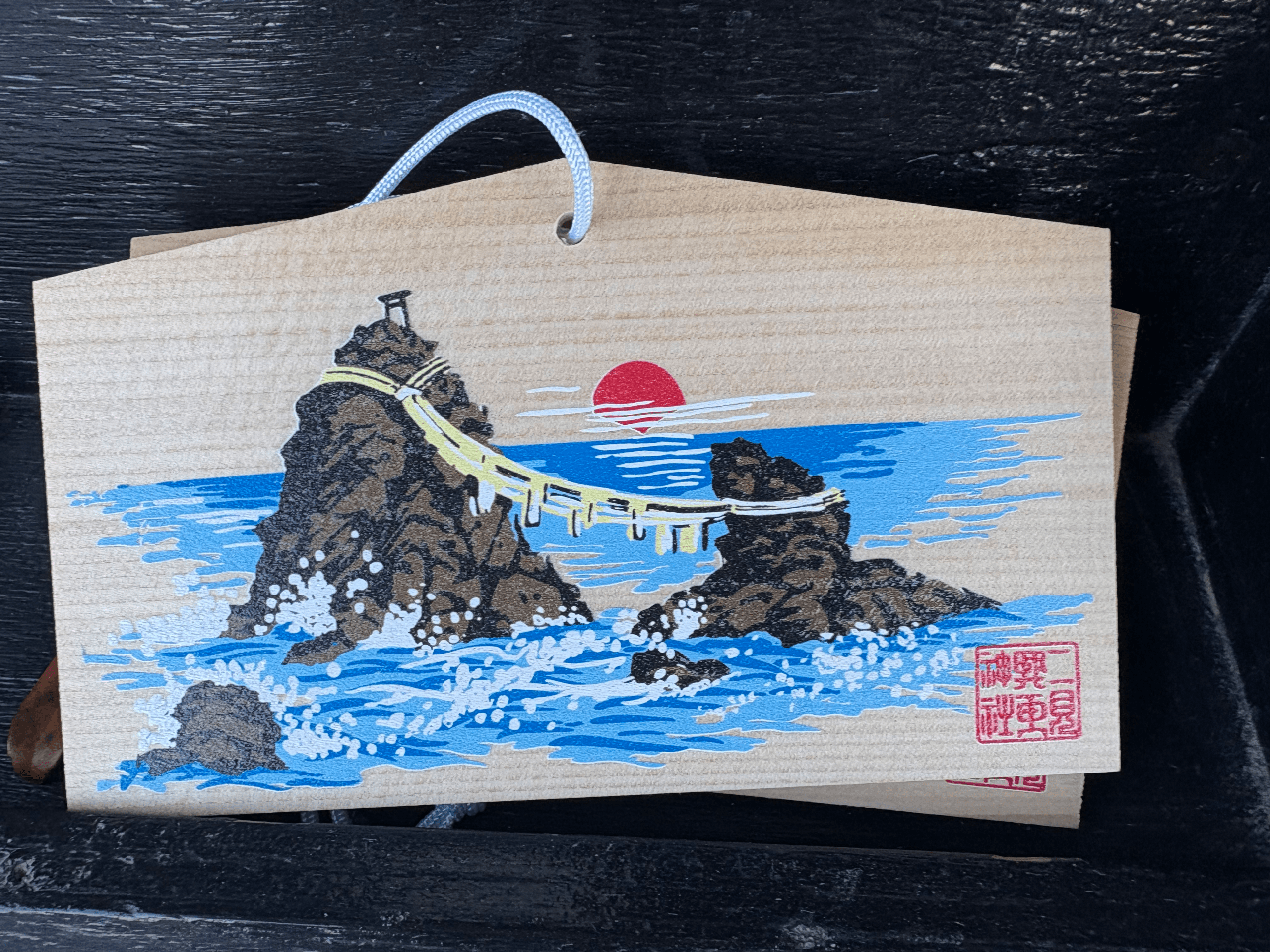
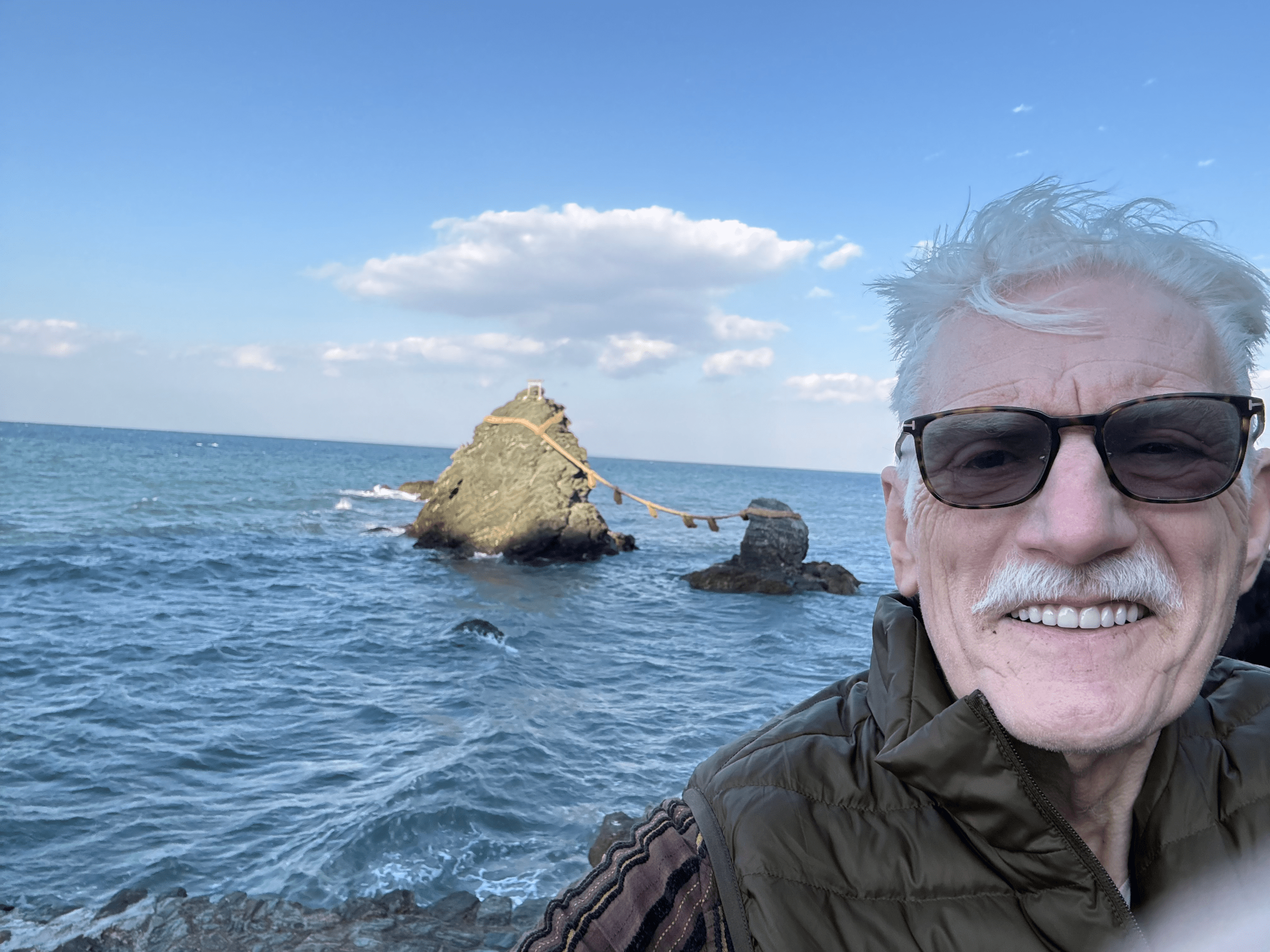
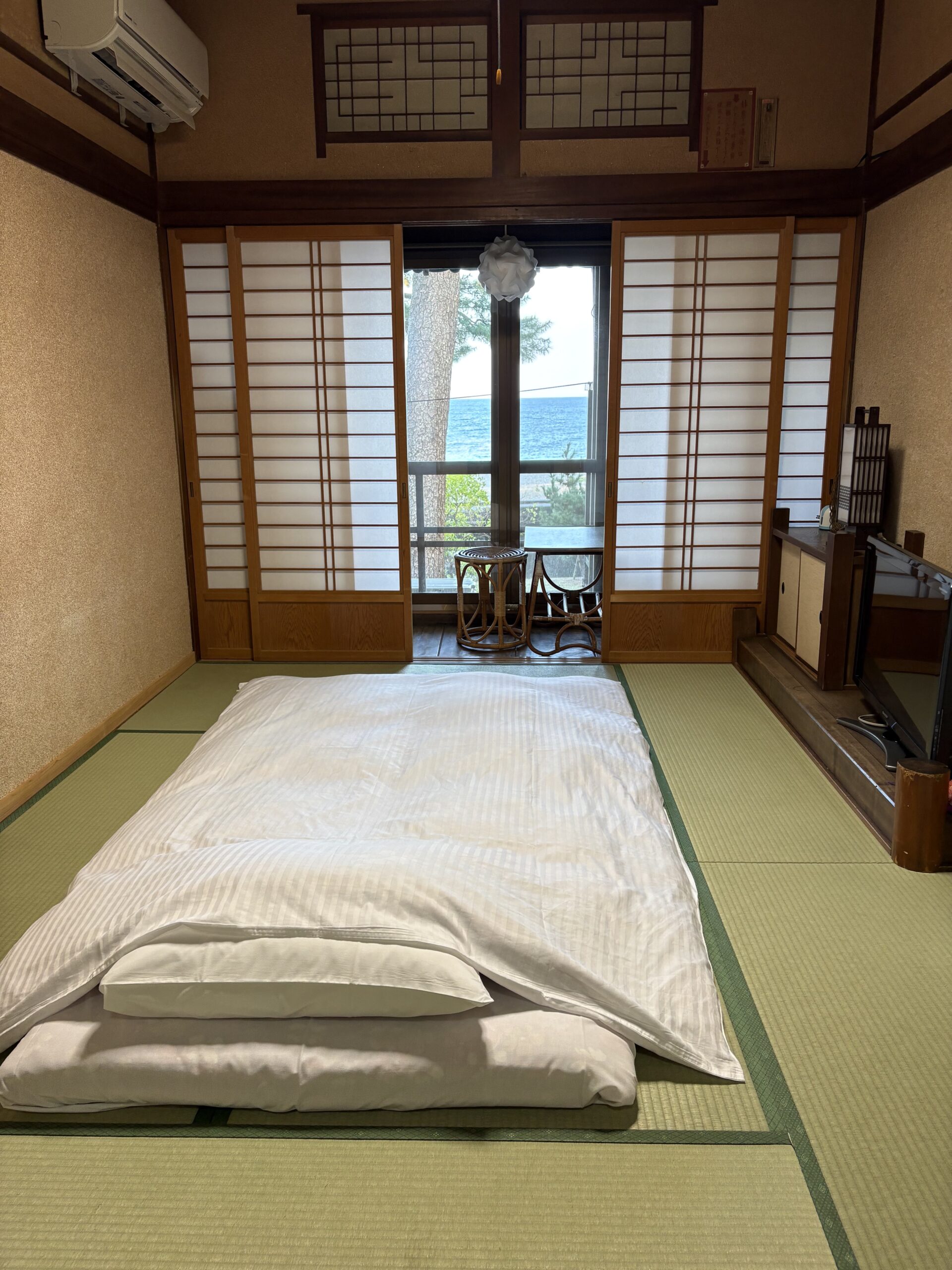
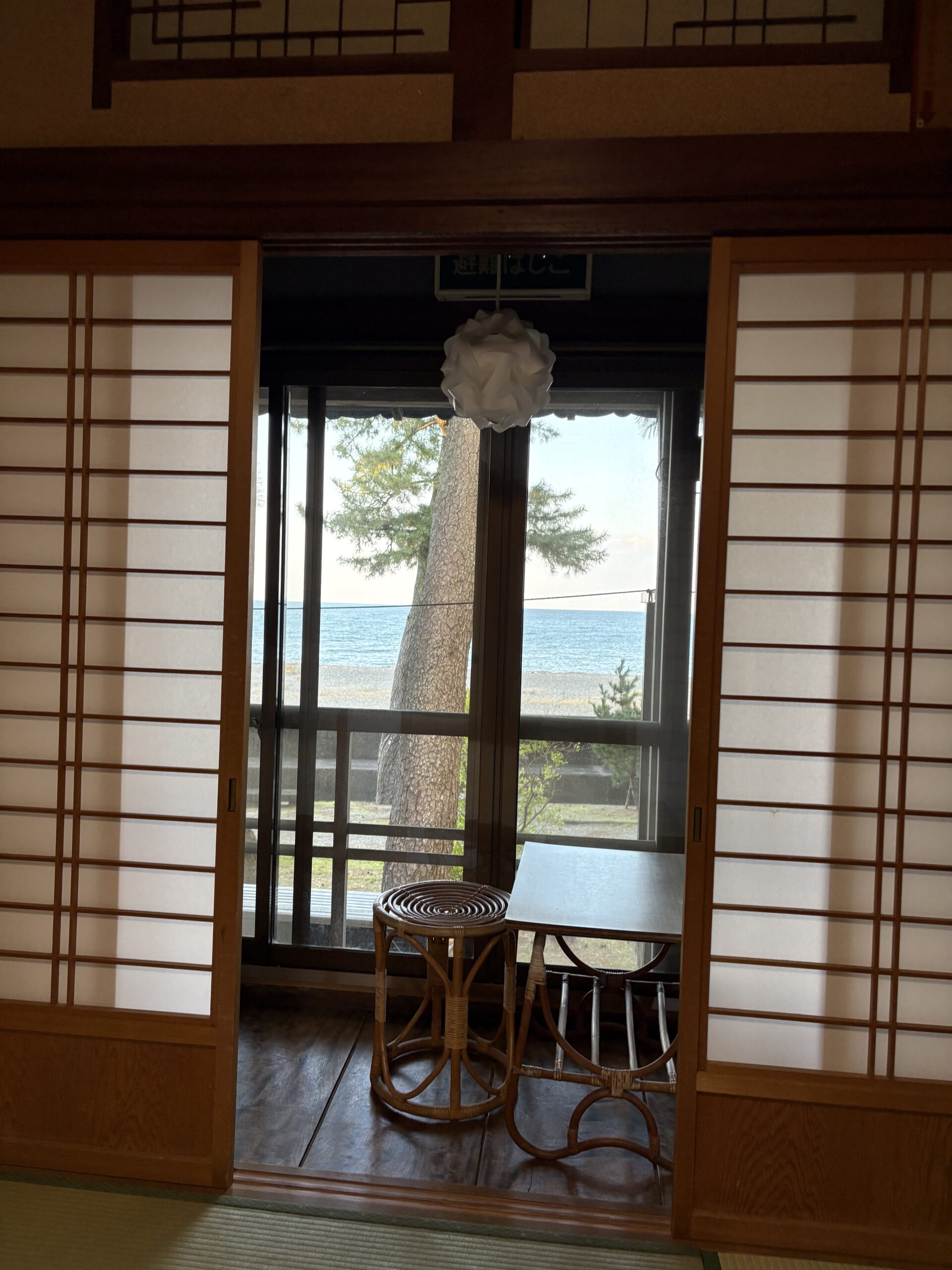
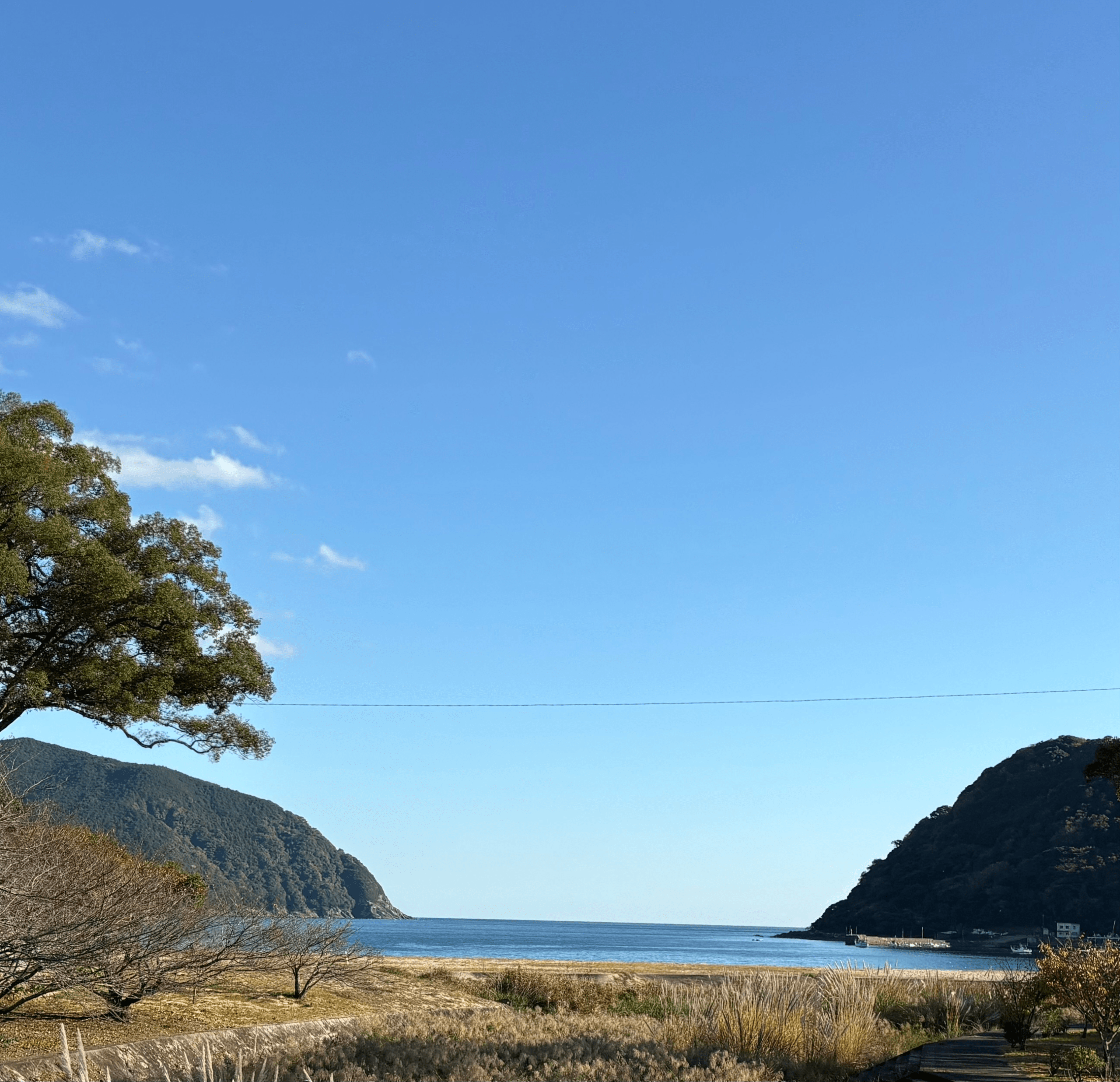
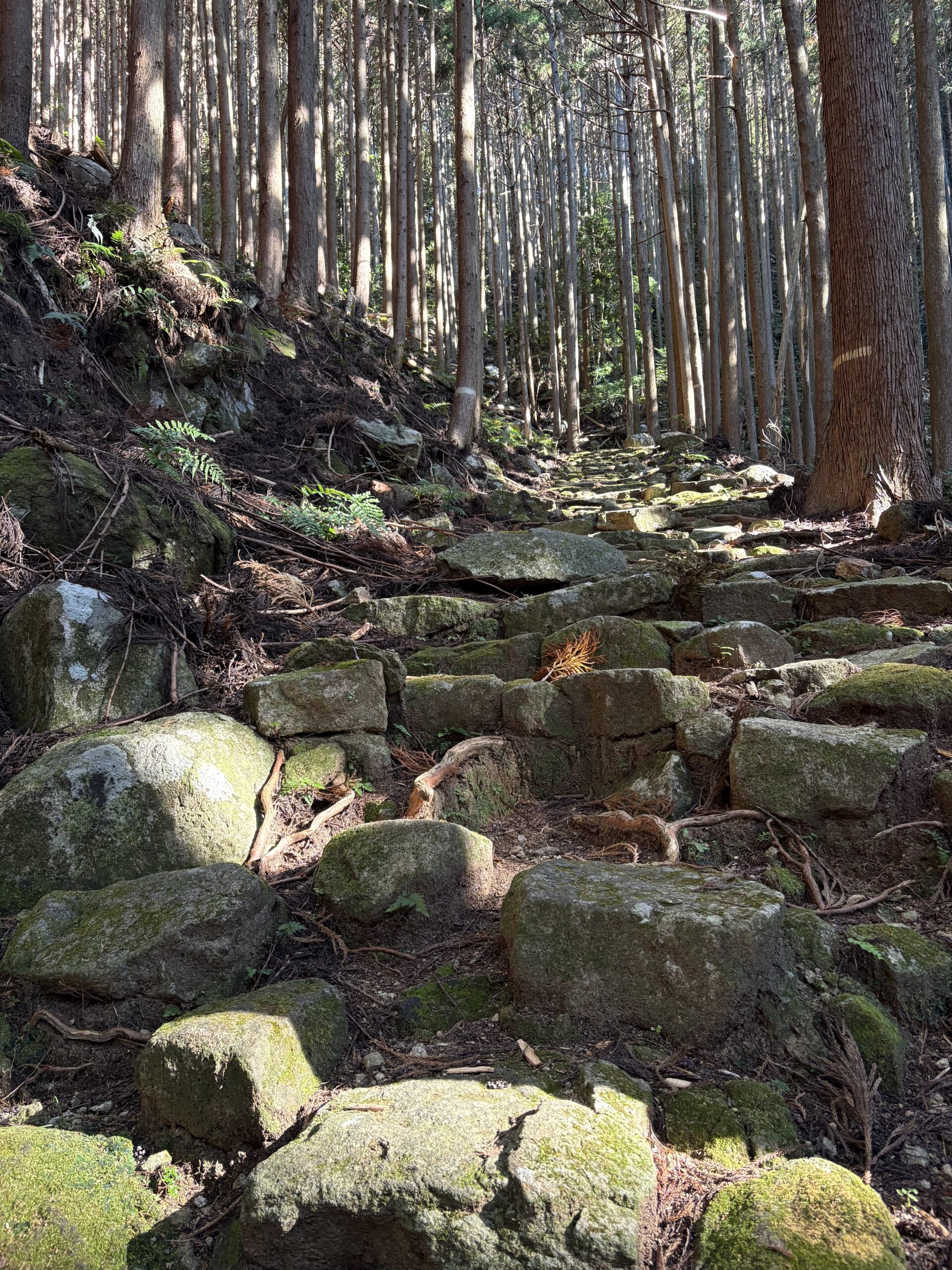
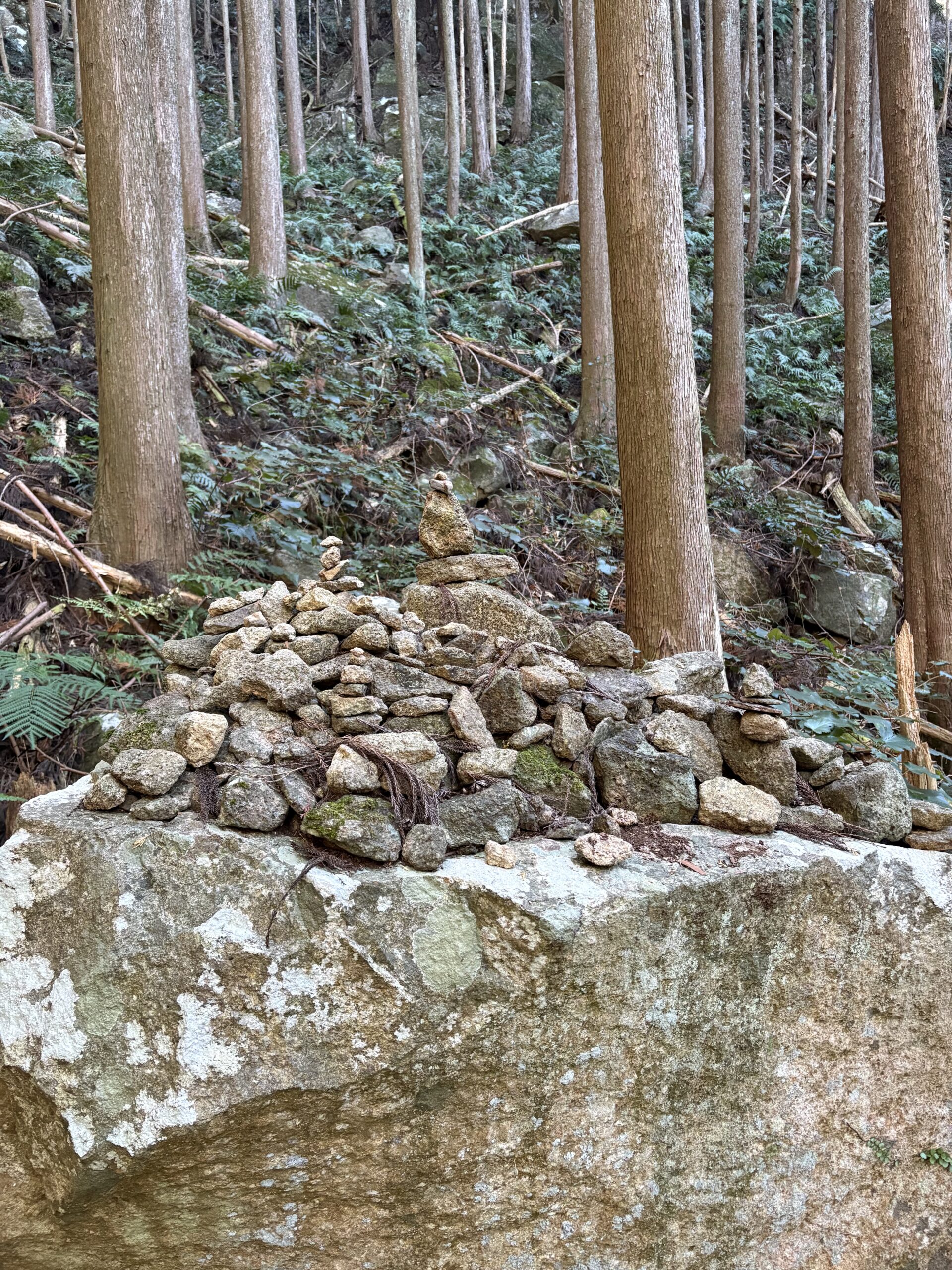
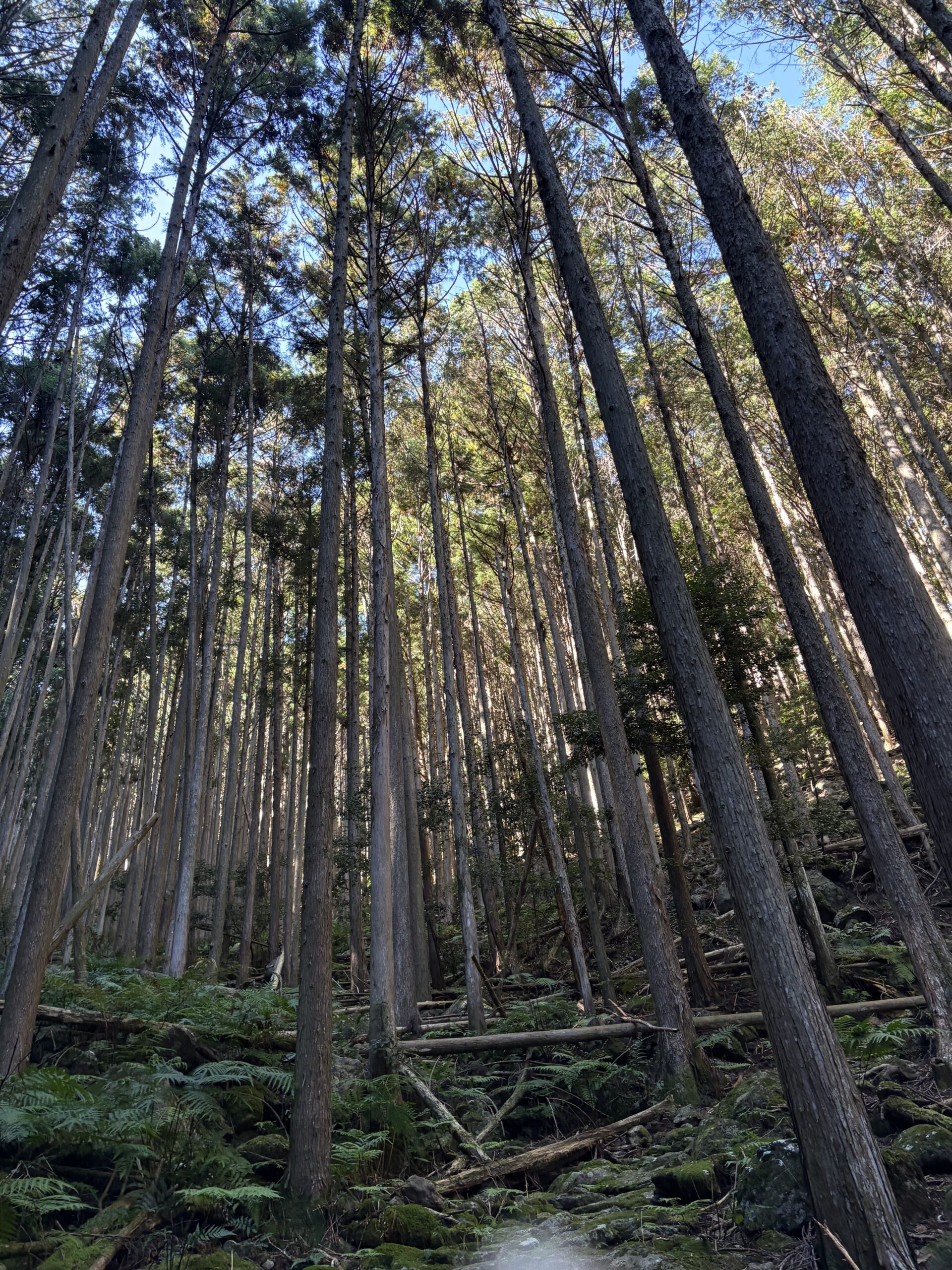
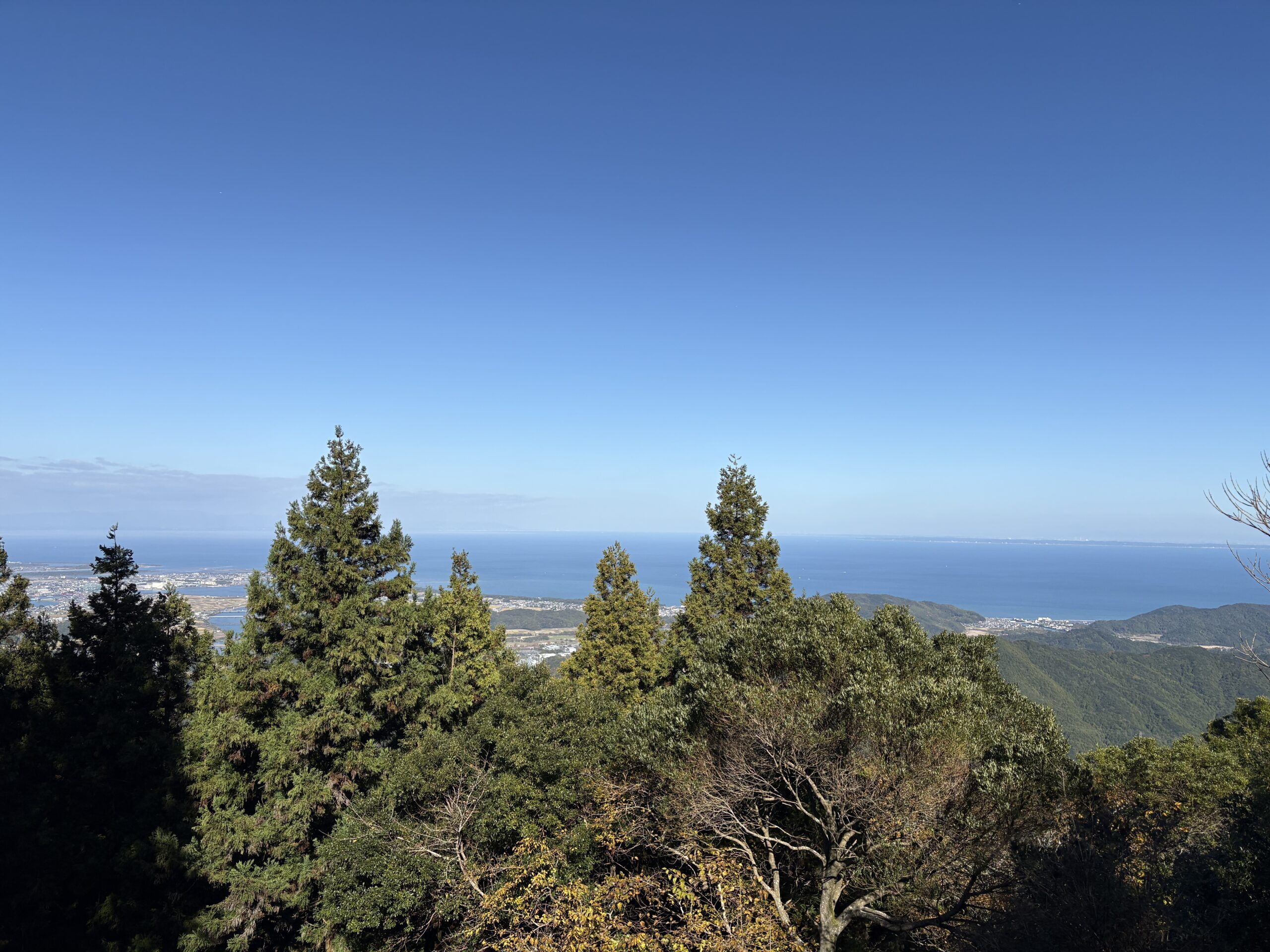
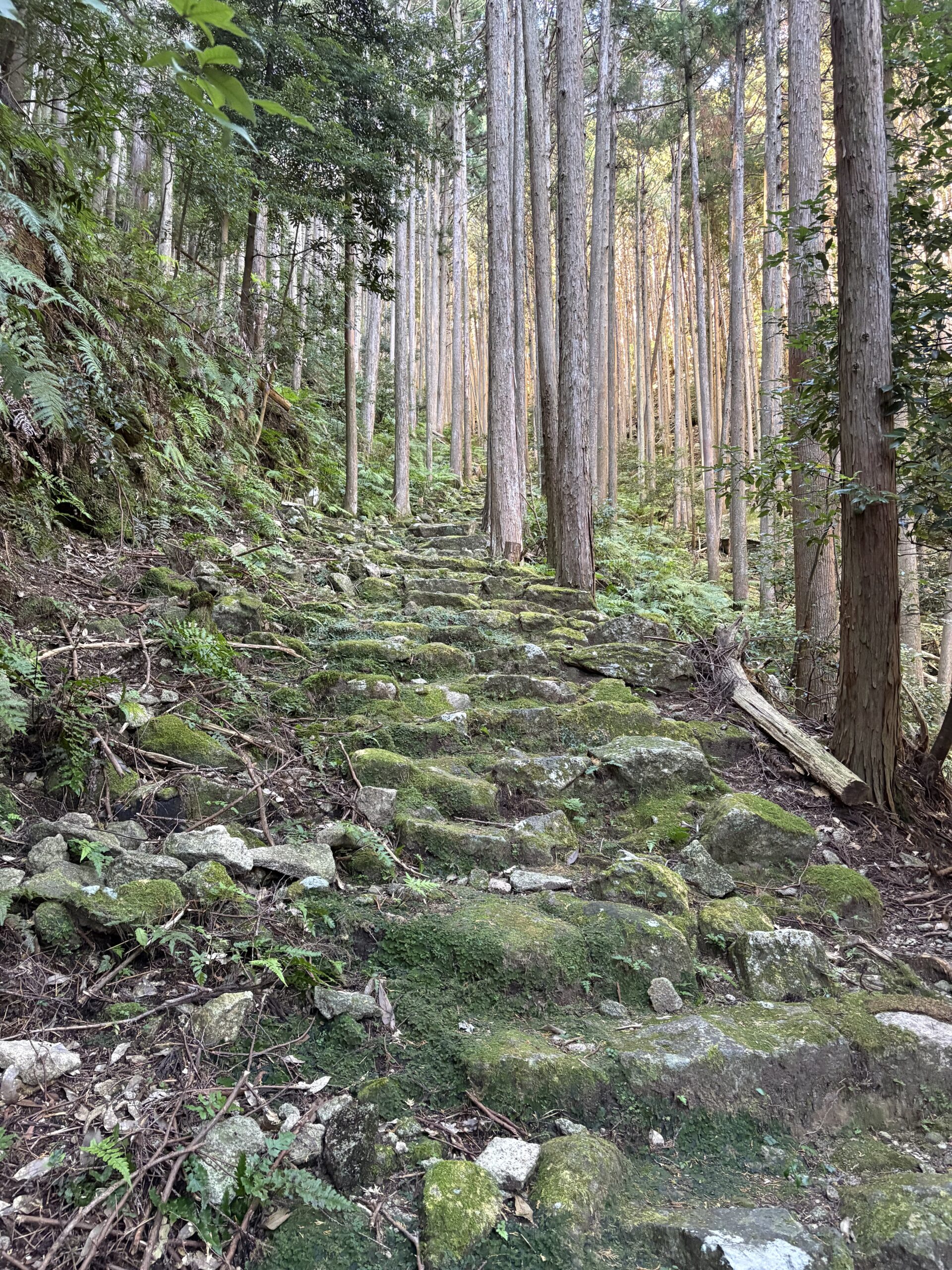

Zen is the experience. Hiking up a mountain and down again without distraction from the trees, moss and rocks is the meditation
In two days I have visited three small towns, none have had any visible commercial establishment, cars are few and people walking are almost non existent. I waited for over an hour at a train station to take me approximately 20 miles, no one else was at the station. When. the train stopped one person got off and I got on. All the problems of the world do not exist in isolation. Sounds from wind bending trees have become my music.
Three days ago I crossed a bridge with ornate Iron capitols which people were rubbing until there was a shined spot. I asked an old man why. He said this is where and how you talk to God. He spoke with the passage into the wilderness of mountain climbing.


November 25, my last day on the Kumano kodo. After days of walking up and down mountains, listening carefully only to hear a distant crow, this sojourn ends at the Kamikura Shrine overlooking Nachi falls. Its’ grandeur contrasts the stark simplicity of the last three days. Take care of nature and nature will take care of you.

This is where I completed the 77 kilometers . The trek has finished but my stories continue on Instagram; carldmorton


